Synopsis
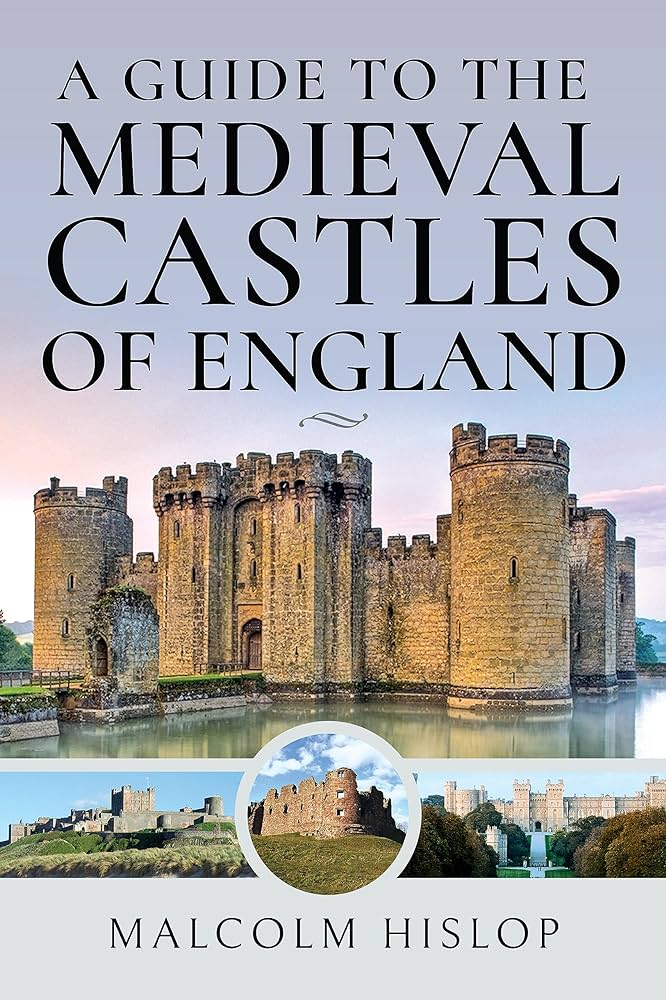
Spread across the medieval kingdom of England in a network of often formidable strongholds, castles, like cathedrals, are defining landmarks of their age, dominating their settings, in many cases even to this day. By representing an essential aspect of our history and heritage, the interpretation of which is constantly being revised, they demonstrate the value of Malcolm Hislop’s compact, authoritative and well illustrated new guide to English castles.
The gazetteer includes an astonishing variety of types, sizes and designs. Individual entries bring out the salient points of interest including historical context, building history and architectural character. The defensive and domestic purposes of these remarkable buildings are explained, as is the way in which their layout and role developed over the course of hundreds of years, from the predominantly earth and timber fortresses of the Normans to the complex stone castles of the later Middle Ages, many of which can be visited today.
Hislop’s experience as an archaeologist specialising in medieval buildings, castles in particular, as well as his eye for structural detail, ensure that his guide is a necessary handbook for readers who are keen on medieval history and warfare, and for visitors who are looking for an accessible introduction to these monumental relics of England’s military past.
Review
Thank you to NetGalley for providing me with a copy of this book.
Malcolm Hislop’s “A Guide to Medieval Castles” is a brief but comprehensive journey through the architectural marvels that defined an era. This engaging non-fiction work serves as an excellent, informative historical guide for enthusiasts and casual readers alike. In this meticulously researched book, Hislop takes readers on a tour of medieval castles, through their history and how each castle is constructed.
The book includes a thorough introduction, a glossary, a bibliography, and a gazetteer organised alphabetically that lists of all the medieval castles that were built between 1050 and 1500.
The gazetteer, which is listed in alphabetic order, makes this book a very organised, easy-to-read guide to medieval castles. Hislop makes sure to include the county each castle is located in, and if it is open to the public to visit, which is a nice detail to include for anyone who wishes to visit the castles. The diagrams of certain sites, as well as the inclusion of illustrations and photos of other sites, breaks up what would otherwise be a long series of text blocks, and also proves useful for visualising how these castles are laid out from Hislop’s descriptions of them.
Hislop’s descriptions include not just how the castle is laid out, but also when it was built, by whom, and a short description of its history for some of the castles. The descriptions are very much focused on the history of the construction and architecture of the castles, rather than any sort of personal history relating to the castles, which makes sense given Hislop’s background as an archaeologist, specialising in buildings archaeology.
The inclusion of a glossary at the beginning of the book is extremely helpful. Despite being a history graduate, I’m not familiar with all the terms listed there, so I imagine that the average reader wouldn’t be either. However, I couldn’t help but notice that terms like “motte and bailey” and weren’t included in the glossary, and even though these are explained in-text, it would have been a useful inclusion in the glossary, I feel.
Another minor issue I had was the length of the introduction, which almost felt like it should have been its own chapter at 16 pages. It’s certainly thorough, and a good primer for the rest of the book. The introduction to this book is a bit dense to read, for something that is supposed to be a semi-casual book meant to introduce readers to the subject. While some parts read quite well and keep you interested, at times it can feel like a bit of a slog to get through because of the way the writing flows. It feels a little more like an introduction to an essay than a “popular history” at times, and writing “popular history” is very different from writing for an academic audience. However, this doesn’t detract from the overall experience of reading the book, and the book is still incredibly interesting despite this.
If you’re interested in reading a brief introduction to medieval castles, specifically how they’re constructed and the history of their construction, then this is the book for you.
Rating: ★★★★☆
You can pre-order your own copy on Amazon
 The Ink Thief