
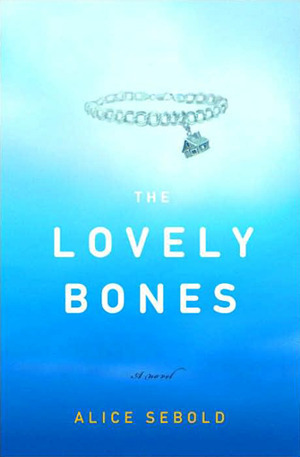
Review
“My name was Salmon, like the fish; first name, Susie. I was fourteen when I was murdered on December 6, 1973.”
So begins the story of Susie Salmon, who is adjusting to her new home in heaven, a place that is not at all what she expected, even as she is watching life on earth continue without her — her friends trading rumors about her disappearance, her killer trying to cover his tracks, her grief-stricken family unraveling. Out of unspeakable tragedy and loss, The Lovely Bones succeeds, miraculously, in building a tale filled with hope, humor, suspense, even joy.
Synopsis
I first read “The Lovely Bones” for A-Level English Literature, and it has stuck with me ever since. Alice Sebold’s novel is a poignant and uniquely narrated story that delves deep into the aftermath of tragedy. Through the eyes of a young girl who has met an untimely and violent death, Sebold explores themes of loss, grief, and the enduring impact of love.
The novel is told from the perspective of 14-year-old Susie Salmon, who, after being raped and murdered, watches over her family and her killer from the afterlife. As her family struggles with their grief and the unresolved nature of her death, Susie experiences a range of emotions, from anger and a desire for justice to a deep longing to be with her loved ones again.
This novel is a striking exploration of the grieving process and the ripple effects of a single violent act on a family and community. Sebold’s decision to narrate the story from Susie’s afterlife perspective is both innovative and haunting, giving the novel a surreal quality that intensifies its emotional impact. The themes of resilience in the face of unimaginable loss, and the painful journey towards healing and acceptance, are central to the story.
As a reader, I found “The Lovely Bones” to be deeply moving and thought-provoking. Sebold’s prose is lyrical and evocative, capturing the poignancy of Susie’s lost potential and her family’s despair. The novel’s strength lies in its ability to convey profound emotions with sensitivity and grace, inviting the reader to contemplate life, death, and the connections that transcend them.
One of the most compelling aspects of “The Lovely Bones” is its exploration of the varying ways individuals cope with loss. Each character in Susie’s family responds to her death in a distinct manner, painting a multifaceted picture of grief that resonates with realism. The novel also touches upon the theme of coming of age under extraordinary circumstances, both for Susie, who undergoes a journey of understanding and acceptance in her afterlife, and for those she leaves behind.
The character development in “The Lovely Bones” is noteworthy. Sebold crafts each character with care, allowing them to evolve in response to the tragedy in ways that are both heartbreaking and profoundly human. The reader can feel the palpable change in each character as the story progresses, adding to the novel’s depth and emotional impact.
While the novel’s ethereal elements are integral to its charm, they may not resonate with every reader. The metaphysical aspects of Susie’s afterlife, which lean towards the fantastical, might stretch credulity for those who prefer more straightforward narratives. Additionally, the resolution of the plot, particularly concerning Susie’s killer, might leave some readers seeking a more conventional sense of closure or justice. The topic of rape and murder can also be quite difficult to read about, so this book is not recommended for all readers.
“The Lovely Bones” is a novel that stays with you long after you’ve turned the last page. Sebold’s ability to blend the tragic with the hopeful, the mundane with the metaphysical, results in a reading experience that is as unsettling as it is uplifting. The novel succeeds in making the reader ponder the fragility of life and the indelible impact of our connections with others.
This book is recommended for readers who are looking for a deeply moving story that combines elements of mystery, drama, and speculative fiction. It is well-suited for those who appreciate novels that provide a cathartic exploration of the human condition, as well as for readers who enjoy narratives that encourage philosophical reflection on life and death. However, I wouldn’t recommend it for readers who are sensitive around subjects including rape and murder.
Alice Sebold’s “The Lovely Bones” is a novel of rare beauty and power. Its exploration of grief, love, and redemption is both poignant and insightful, making it a deserving recipient of four stars. This book is not just a story about a young girl’s tragic end; it’s a testament to the enduring nature of love and the resilience of the human spirit.
Rating: ★★★★☆
 The Ink Thief