Synopsis
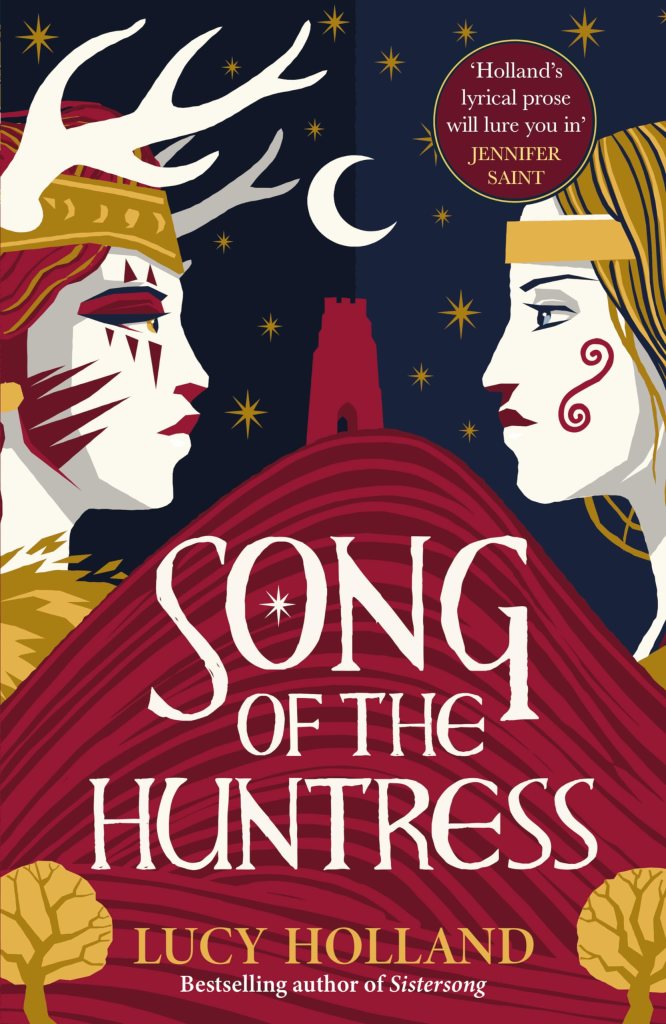
A must-read for fans of Circe, Song of the Huntress recasts the folklore behind the Wild Hunt into a dark, feminist fantasy set amidst the legends and beauty of ancient Britain.
Britain, 60AD. Hoping to save her lover, land and her people from the Romans, Herla makes a desperate pact with the king of the Otherworld. But years pass unheeded in his realm, and she escapes to find everyone she loved long dead. Cursed to wield his blade, she becomes Lord of the Hunt. And for centuries, she rides, reaping wanderers’ souls. Until the night she meets a woman on a bloody battlefield – a Saxon queen with ice-blue eyes.
Queen Æthelburg of Wessex is a proven fighter. But when she leads her forces to disaster in battle, her husband’s court turns against her. Yet King Ine needs Æthel more than ever: the dead kings of Wessex are waking, and his own brother seeks to usurp him. Ine’s only hope is to master the magic that’s lain dormant in his bloodline since ancient days.
When their paths cross, Herla knows it’s no coincidence. Something dark and dangerous is at work in the Wessex court. The Otherworld seeks to rise, to bring the people of Britain under its dominion. As she and Æthel grow closer, Herla must find her humanity – and a way to break the curse – before it’s too late.
Review
Song of the Huntress by Lucy Holland is a hauntingly beautiful reimagining of the Wild Hunt, blending history, mythology, and fantasy into a dark, captivating journey through ancient Britain. From the first page, Holland immerses readers in a richly crafted world, where magic and myth bleed into the lives of her unforgettable characters, creating a story that lingers long after the final chapter.
At the heart of the novel is Herla, a woman both cursed and empowered by immortality, bound to lead the Hunt for eternity. Herla’s character is a standout—tragic yet fiercely resilient—embodying a profound sense of loss and duty that drives the novel’s emotional intensity. Holland’s portrayal of Herla is deeply nuanced, weaving in themes of power, sacrifice, and the struggle to maintain humanity in the face of impossible burdens. Herla’s relationship with Æthelburg, the fierce Saxon queen, forms the emotional core of the story. Their bond is both passionate and tumultuous, filled with layers of tension and tenderness, and adds a deeply personal dynamic to the epic scope of the tale.
Holland’s prose is a true highlight. It’s lyrical, evocative, and rich with atmosphere, transporting readers to the wild, untamed landscapes of Britain’s past. The world-building is immersive, steeped in historical and mythological details that feel authentic yet fantastical, bringing the magic of the Hunt and the ancient world to life. Holland deftly balances the eerie, supernatural elements of the Wild Hunt with the gritty realities of power struggles and human emotion, creating a world that feels both grounded and otherworldly.
The novel is as much a meditation on power and loss as it is an epic adventure. Holland explores the nature of immortality, the weight of leadership, and the lingering scars of personal and collective trauma. The philosophical depth of Song of the Huntress sets it apart from more straightforward fantasy tales, making it a thought-provoking read for those who appreciate stories with emotional and intellectual substance.
One aspect to note is the novel’s pacing. At 400 pages, Song of the Huntress is a slow-burn read, unfolding at a measured pace that may challenge readers looking for constant action. However, those who stick with the journey will find the payoff deeply rewarding, as the tension builds steadily toward a powerful and satisfying conclusion.
Whether you’re a fan of historical fiction, mythology, or dark fantasy, Song of the Huntress is a bold, original work that redefines what we expect from the genre. Holland has crafted a story that is as emotionally resonant as it is thrilling, and her ability to weave myth and history together is nothing short of masterful. This is a must-read for anyone who enjoys richly layered stories that linger in the imagination long after the final page is turned.
 The Ink Thief