Synopsis
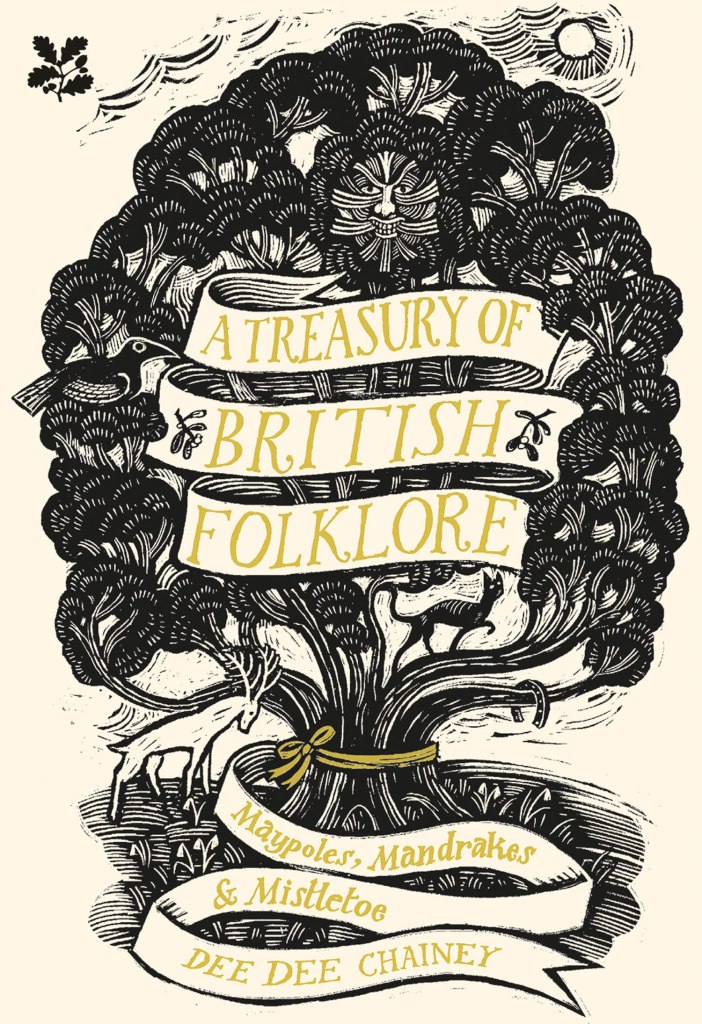
Did you know, in Cumbria it was believed a person lying on a pillow stuffed with pigeon’s feathers could not die? Or that green is an unlucky colour for wedding dresses? In Scotland, it was thought you could ward off fairies by hanging your trousers from the foot of the bed, and in Gloucestershire you could cure warts by cutting notches in the bark of an ash tree.
You’ve heard about King Arthur and St George, but how about the Green Man, a vegetative deity who is seen to symbolise death and rebirth? Or Black Shuck, the giant ghostly dog who was reputed to roam East Anglia? In this beautifully illustrated book, Dee Dee Chainey tells tales of mountains and rivers, pixies and fairy folk, and witches and alchemy. She explores how British culture has been shaped by the tales passed between generations and by the land that we live on.
As well as looking at the history of this subject, this book lists the places you can go to see folklore alive and well today. The Whittlesea Straw Bear Festival in Cambridgeshire, or the Abbots Bromley Horn Dance in Staffordshire, for example, or wassailing cider orchards in Somerset.
Review
A Treasury of British Folklore is a charming, accessible introduction to the rich and often strange tapestry of folklore across Britain. It’s a book that invites you to dip in and out, to linger over curious customs and half-remembered traditions – and to come away with a renewed sense of how deeply folklore is woven into the fabric of everyday life.
Chainey takes a wide-angled approach, covering everything from seasonal rituals and local customs to supernatural beliefs, folk traditions, and remnants of the pre-industrial past that still echo today. The scope is impressive, and the book succeeds in showing just how varied British folklore really is, from region to region, village to village.
What works particularly well is the tone. Chainey writes with warmth and clarity, making this a very approachable read even for those who are new to folklore. There’s a genuine affection for the subject that comes through on every page, and it makes the book a pleasure to spend time with.
That said, A Treasury of British Folklore lives up to its name perhaps a little too literally: this is a treasury, not a deep dive. Each topic is treated briefly, often just enough to spark interest before moving on. While this makes the book highly readable, it can also be frustrating. Time and again, I found myself wanting more – more context, more historical background, more exploration of how and why these traditions developed.
For readers already familiar with folklore, or those looking for detailed analysis and sources, this may feel a little thin. The book is more suggestive than scholarly, offering glimpses rather than full examinations.
Where the book truly shines is as a browsing text. It’s ideal for reading in short bursts – picking up a few entries at a time, learning something curious, and then putting it down again. In that sense, its brevity becomes a strength rather than a flaw. It feels designed to inspire curiosity, encouraging readers to seek out further reading rather than attempting to be definitive.
A Treasury of British Folklore is an engaging, well-written overview that succeeds in capturing the breadth and charm of Britain’s folkloric traditions. While it doesn’t go into much depth, it offers plenty to intrigue and delight, making it a great starting point for newcomers—or a pleasant refresher for those already interested in the subject. It may leave you wanting more, but sometimes that’s exactly what a good folklore book should do.
 The Ink Thief