Synopsis
Born of the sun and moon, shaped by fire and malady, comes a young woman whose story has never been told . . .
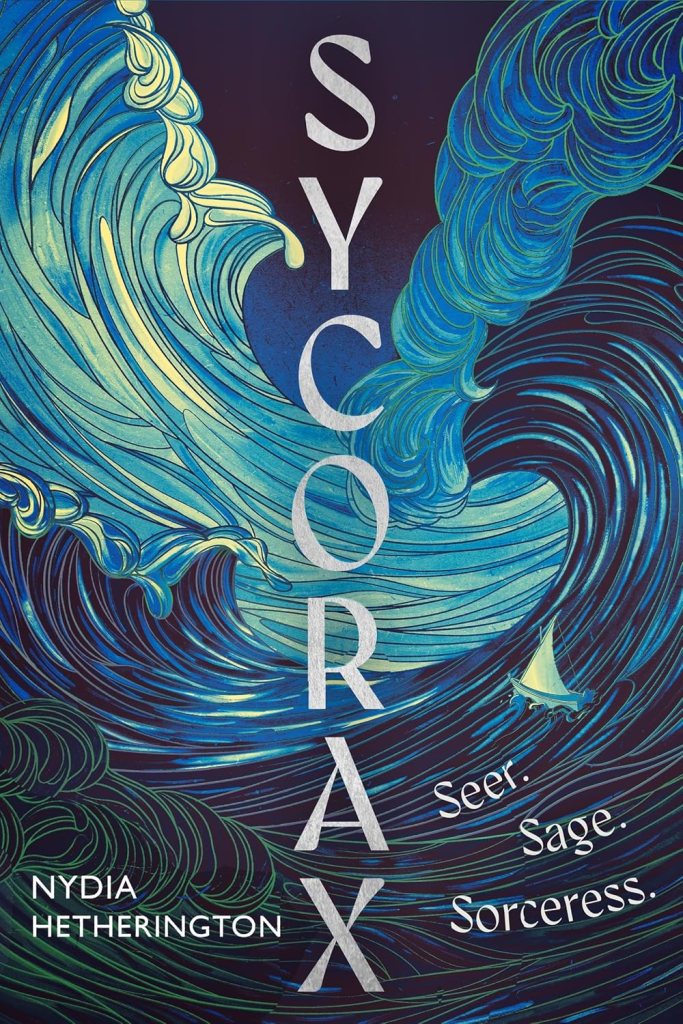
They call her Sycorax. Seer. Sage. Sorceress.
Outcast by society and all alone in the world, Sycorax must find a way to understand her true nature. But as her powers begin to grow, so too do the suspicions of the local townspeople. For knowledge can be dangerous, and a woman’s knowledge is the most dangerous of all . . .
With a great storm brewing on the horizon, Sycorax finds herself in increasing peril – but will her powers save her, or will they spell the end for them all?
Review
A captivating reimagining of Shakespeare’s most powerful witch, Sycorax is a novel that draws you in through language first and character second – and by the time those two elements intertwine, it becomes difficult to look away.
Hetherington’s prose is lush, poetic, and deeply atmospheric. There is a deliberate, almost incantatory quality to the language that feels perfectly suited to the story being told. The writing casts a spell early on and sustains it, grounding the novel in a sense of myth, memory, and inevitability. This is a book that asks to be read slowly, savouring its rhythms and imagery rather than rushing headlong through the plot.
While the novel centres on Sycorax herself, the true strength of the book lies in its characterisation across the board. Atlas and Sunny – Sycorax’s parents – are as fully realised as the protagonist, and their relationship, choices, and flaws leave deep impressions. Their presence gives the novel emotional weight and grounding, shaping Sycorax long before she steps fully into her own power, or even onto the page.
Sycorax herself is compelling, fierce, and unforgettable. Although she is supposedly called Raven at one point in her life, by the end of the novel, that name feels entirely erased – she is Sycorax, wholly and completely. Hetherington ensures that her transformation feels earned, shaped by experience rather than destiny alone.
Yemma is another intriguing presence, as are many of the men who move through the narrative. They are often deeply unpleasant – violent, manipulative, selfish – but never cartoonish. Their cruelty feels grounded in reality, which only heightens the discomfort they bring to the page, as does their sometimes surprising kindness and empathy.
One of the novel’s most striking strengths is its refusal to soften or romanticise the uglier sides of human relationships. Abuse, betrayal, cheating, manipulation, and heartbreak are presented plainly, without justification or glamour. Hetherington does not flinch from showing how these experiences damage, shape, and sometimes harden her characters. The relationships feel real, lived-in, and painfully believable, and that honesty lends the story much of its emotional power.
Plot-wise, Sycorax offers a thoughtful and compelling backstory for a character who exists mostly in absence in The Tempest. Hetherington builds upon the scant details Shakespeare gives us, crafting a narrative that feels respectful of the source material while confidently expanding it. This is not a retelling so much as a reclamation – one that gives depth, agency, and voice to a woman long defined by others.
Sycorax is a richly written, character-driven novel that rewards patience and attention. Its beautiful prose, emotionally complex relationships, and unflinching honesty make it a powerful reimagining of a marginalised literary figure. While it may not be a book for those seeking a fast-paced plot, it is deeply satisfying for readers drawn to myth, language, and character above all else.
 The Ink Thief